
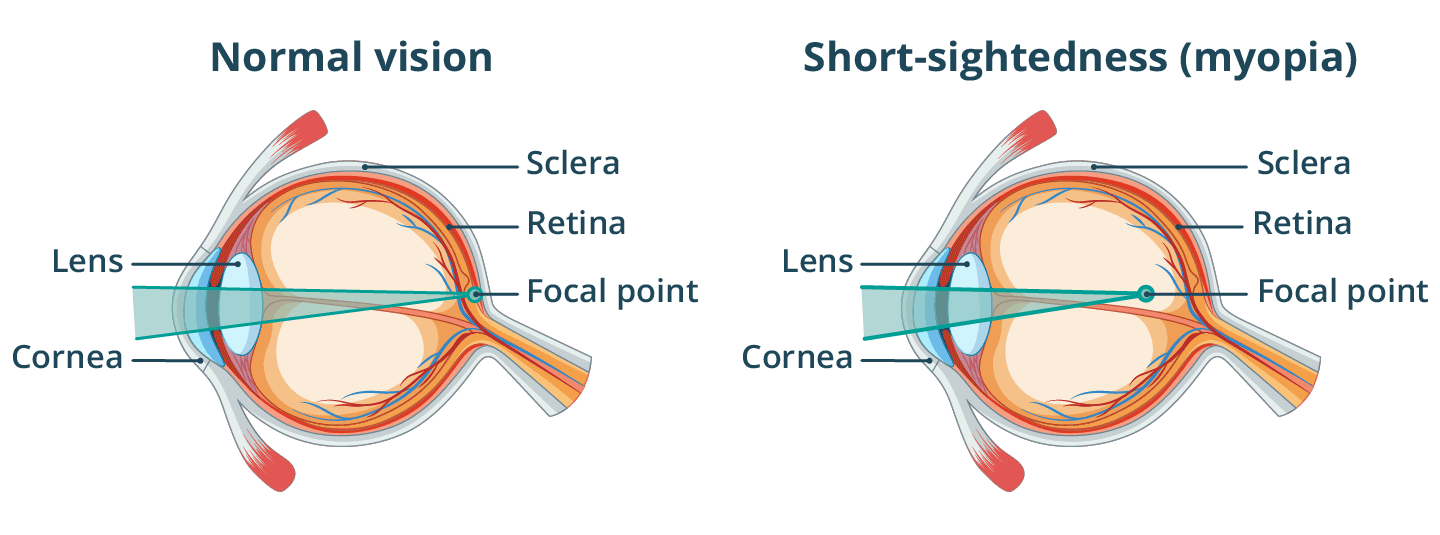
Myopia, commonly known as near-sightedness or short-sightedness, is a vision condition where you can see objects up close clearly, but objects farther away appear blurry. This happens because the eye's shape causes light rays to bend incorrectly, focusing images in front of the retina rather than directly on it. It can be caused by the eyeball being too long or the cornea having too much curvature.
If the cornea, the clear window at the front of the eye, is too curved or your eye is too long, the light that enters your eye will not focus correctly. Studies of myopia indicate myopia is caused by both hereditary and environmental reasons. Environmental factors like staying indoors and excessive amounts of near work are linked to myopia.
Research suggests that children need to preferably spend at least two hours a day outside to help prevent myopia from developing. Near work on screens may not itself cause myopia but screens are responsible for children spending more time indoors than in previous years.
Get outside and give your eyes a break from digital devices.
For more information, please visit: https://www.mykidsvision.org/
what is myopia?
FAQs
-
There are two main reasons.
The eyeball grows too long
The cornea is too curved for the lenght of the eye
-
There are two main factors that contribute to your child developing myopia:
Lifestyle.
Modern lifestyles may influence the development of myopia, these include, low levels of outdoor activity, low levels of light exposure and prolonged near tasks, such as reading, gaming on portable devices and mobile phone use.
Family History.
There is a link between children developing myopia if there is a family history of parents being myopic. There are on-going studies into the development of myopia on children.
-
There is no cure for myopia. Correctly prescribed glasses or contact lenses will help you to see clearly but will not cure your short-sightedness.
Laser surgery to reshape your cornea and refocus light can correct myopia in some people and eliminate the need for glasses or contact lenses.
-
Your optometrist will tell you if you need to wear glasses full-time or part-time to enable you to see clearly. Sometimes you will need them only for some activities such as driving, going to the movies or in the classroom.
Many short-sighted people use both glasses and contact lenses to help them see clearly. Contact lenses are great for people with an active lifestyle.
-
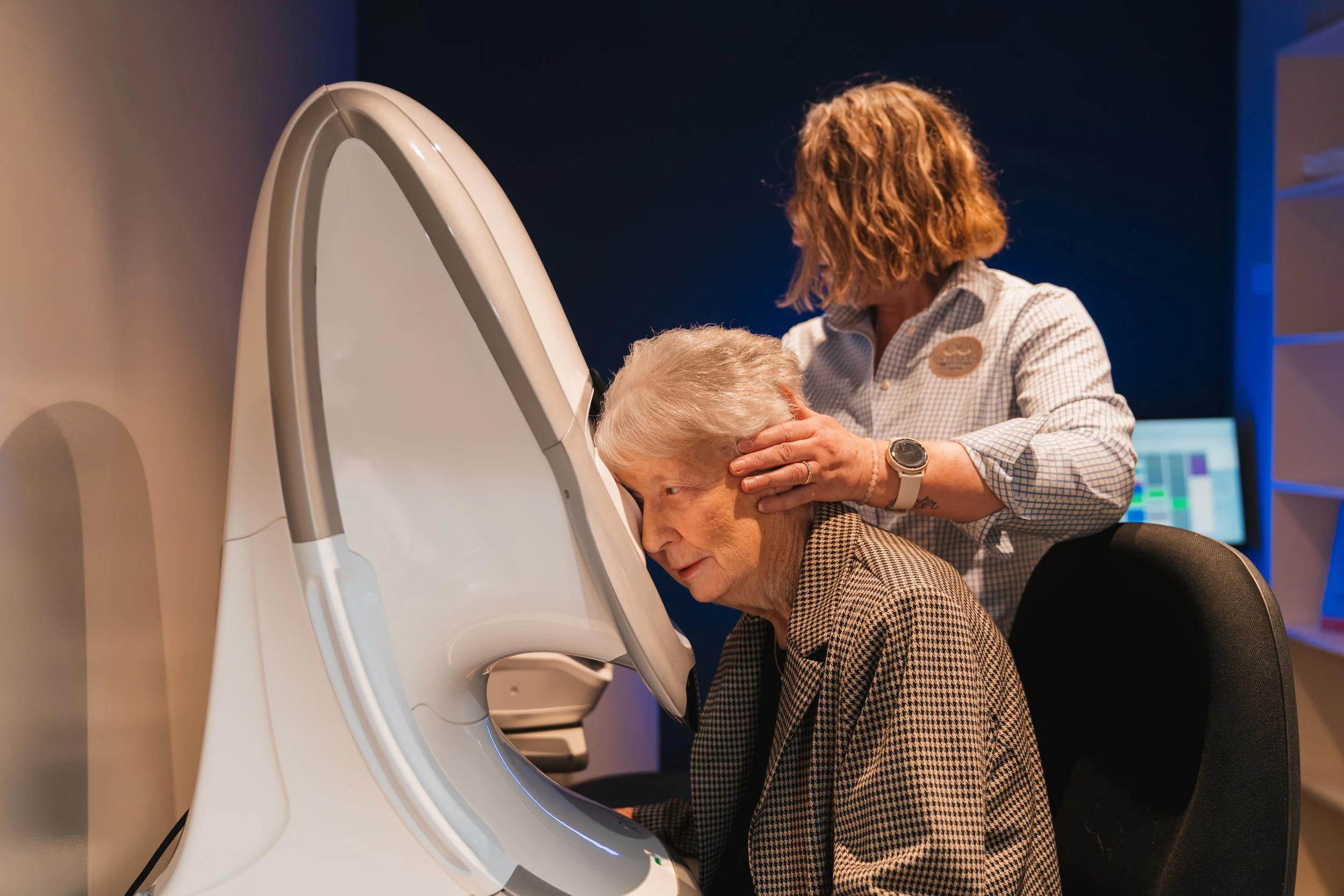
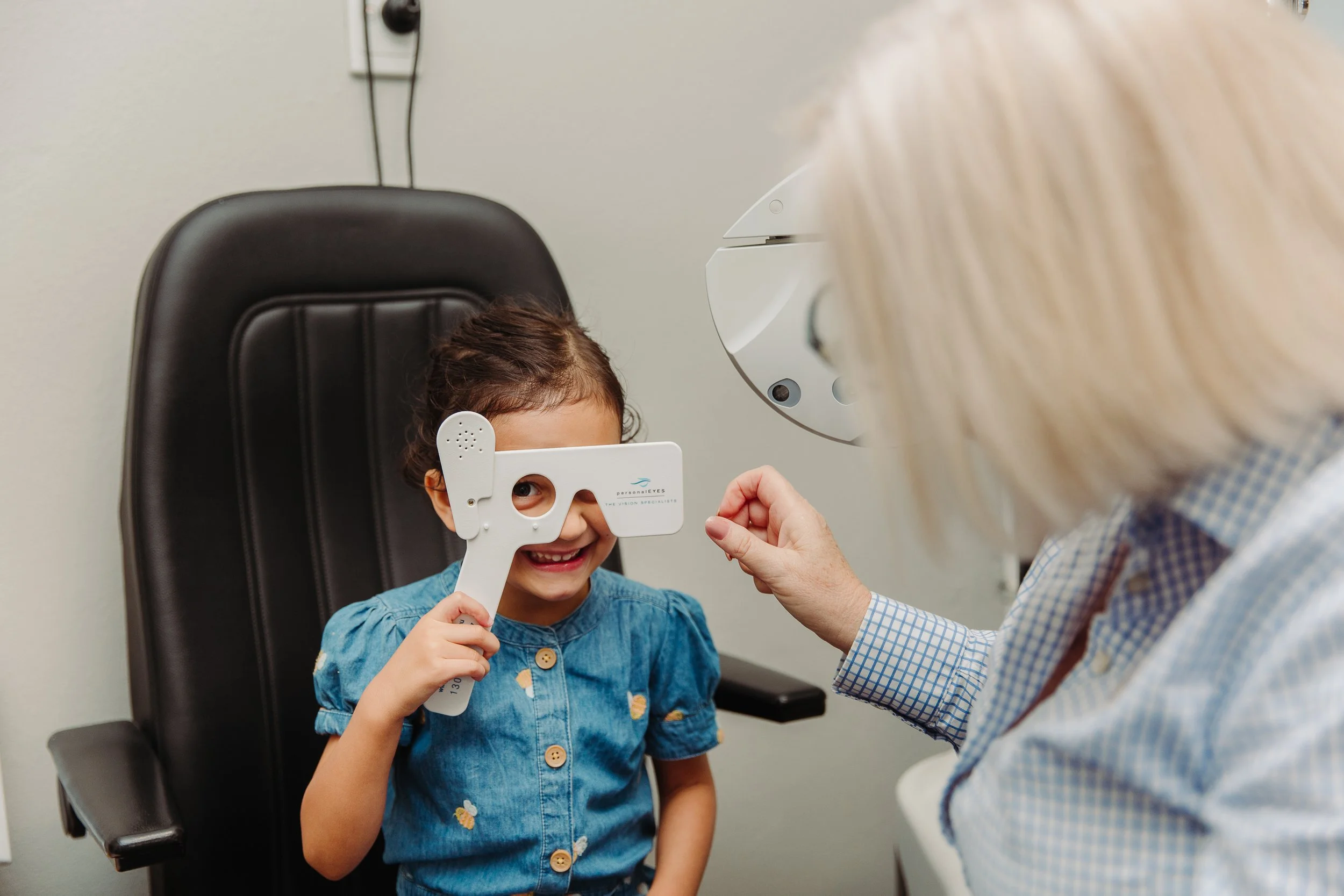
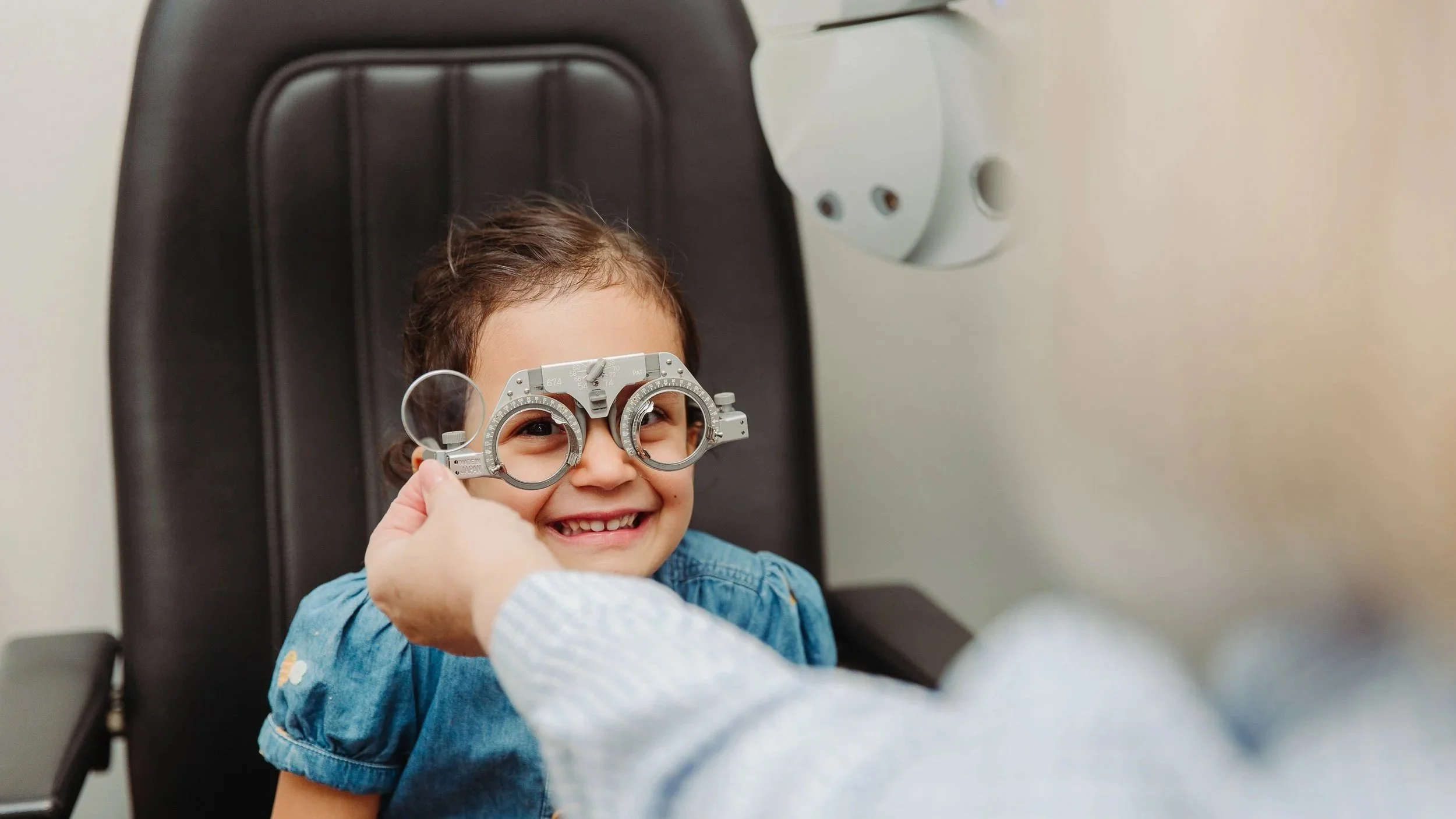
Short-sighted people will see distant objects as a blur. Some people do not realise that they cannot see clearly but an eye examination by an optometrist will test for myopia. Optometrists use an eye chart to gauge how well you see in the distance, and place different lenses in front of your eyes to find the lenses that give you the clearest vision. Using these results and other tests, your optometrist can tell if you are short-sighted.
-
An eye examination is the only sure way of determining whether your child is short-sighted. Some clues to myopia in a child are:
Squinting or screwing up their eyes to see distant objects
Difficulty reading the board at school
Lack of interest in playing outdoor games
-
Currently, there are a handful of treatments which show promise in slowing the progression of myopia in children and teens. These include atropine eye drops, orthokeratology (“ortho-k”) and multifocal/bifocal glasses or multifocal contact lenses. These treatments can induce changes in the structure and focus of the eye to reduce stress and fatigue associated with the progression of myopia.
It is important to chat about these myopia control options with your child’s optometrist.
It is important for parents to be aware of these different treatments because slowing the progression of myopia in children may prevent the development of severe myopia (or high myopia), which can cause serious eye health problems in adulthood. High myopia can increase risks of cataracts, glaucoma and serious retinal problems later in life that can cause permanent vision loss.