
Amblyopia, often referred to as "lazy eye," is a visual development disorder where one eye fails to achieve normal visual acuity, even with prescription lenses. It typically develops in childhood when the brain and the affected eye do not work together properly. This condition can lead to decreased vision in the affected eye because the brain starts to favor the other eye.
The most common causes of amblyopia include:
1. Strabismus: Misalignment of the eyes, where one eye may turn in, out, up, or down.
2. Refractive Error: Significant differences in prescription between the two eyes, such as in cases of severe nearsightedness, farsightedness, or astigmatism.
3. Deprivation: Obstruction of vision in one eye due to conditions like cataracts.
Treatment usually involves correcting the underlying issue, such as using glasses or contact lenses, and encouraging the use of the weaker eye through methods like patching or vision therapy. Early diagnosis and intervention are crucial for effective treatment and to maximize the chance of improving vision.
amblyopia
-
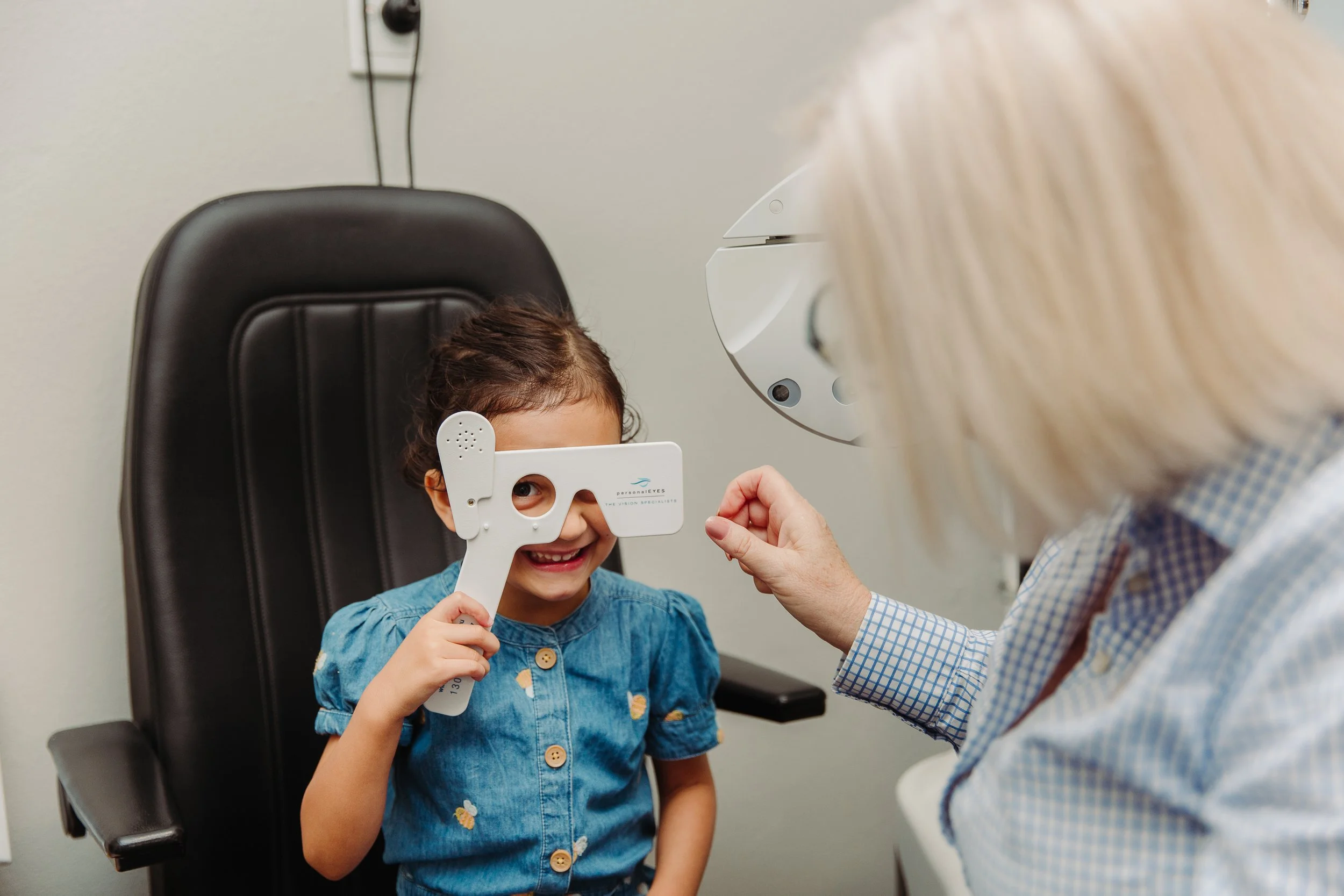
The most important sign is poor vision, but because only one eye is affected and the other eye usually does the work of both, often parents are unaware of the problem. Amblyopia doesn’t cause any eye pain but may cause a child to lose interest in detailed tasks such as reading and writing or lead to poor performance at school. Other clues are a noticeable favouring of one eye, a “turned” eye and bumping into objects on one side of the body. A thorough eye examination is the only sure way of determining whether your child has amblyopia.
-
The treatment depends on the particular cause of the amblyopia.
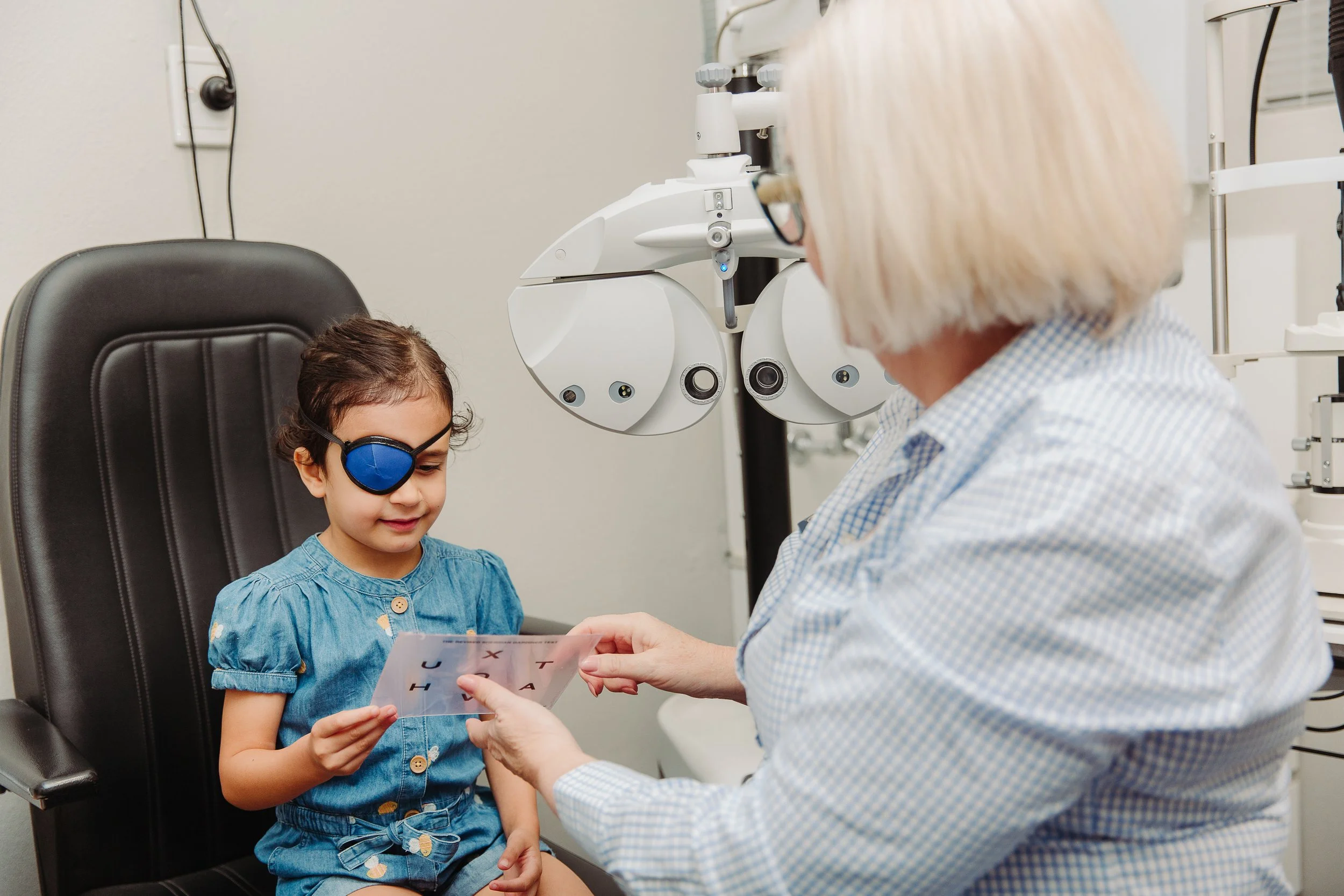
Glasses, contact lenses and binocular vision training strategies can be used to train the poorer eye to function normally. It is also common to patch the better eye to force the person to use and strengthen the poor eye. Our Optometrist may also suggest atropine eye drops as a possible alternative to patching.
Sometimes the better eye is covered with a patch to force the person to use and strengthen the poor eye.
The earlier amblyopia is detected, the easier it is to treat.
-
Approximately four per cent of the population have amblyopia.
-
Amblyopia itself doesn't typically lead to total blindness, but it can result in significant vision impairment in the affected eye if not treated. The vision in the amblyopic eye is usually reduced compared to the other eye, but it is rarely completely lost.
If left untreated, the brain may continue to favor the stronger eye, leading to a persistent visual imbalance. However, with appropriate treatment—such as corrective lenses, patching therapy, or vision exercises—many individuals can improve vision in the affected eye, especially if treatment starts early in childhood.
In rare cases, if amblyopia is severe and left untreated, it can lead to substantial vision loss in the amblyopic eye, but it generally doesn't cause complete blindness. Regular eye exams and early intervention are key to preventing long-term visual impairment.
FAQs